

In 2026, a 7kW home EV Charger in the UK costs between £800 – £1,200 fully installed. This cost includes the charger, mounting, cabling to the consumer unit, and an electrician to complete the commissioning. For London and the South East, the cost is between £900 – £1,500. The average installation cost is more than a straightforward installation (less installation complexity, shorter installation, and a more modern consumer unit) with a less complex consumer unit. For every other installation, the average cost begins to climb, fast.
UK EV charger installations must also comply with electrical regulations, particularly BS 7671 (the IET Wiring Regulations), which includes Section 722 (electric vehicle charging equipment), and Part P (domestic) of the Building Regulations. While this is not a detail you are likely to remember, you should know about it because it explains why installation costs are as they are and why “get a mate to do it cheap” is not possible.
We explain what you are paying for, what factors increase costs, what grants you can get, and how to identify a reasonable quote rather than an inflated one.
Quick answer: The 7kW smart charger cost range is £800 – £1,200 for an easy fully installed surge charger. For complex installations (user unit upgrades, ground works, long runs, etc), the cost is often between £1,800 – £2,500+.
At a Glance
- Average home installation (7kW): £800–£1,200 (London/SE: £900–£1,500)
- Charger unit only: £400–£800 depending on brand and features
- Labour and materials: £400–£600 for a standard job
- EV Chargepoint Grant: up to £500 per socket (renters, flat owners, landlords not outright homeowners with a driveway)
- Workplace Charging Scheme: up to £500 per socket, up to 40 sockets
- VAT: 20% on a standalone installation; potentially 0% if bundled with solar PV
- Typical installation time: half a day for a standard job
- Governing regulations: BS 7671 Section 722, Part P Building Regulations, DNO notification
- Typical charger warranty: commonly around 3 years from the manufacturer, plus a separate workmanship guarantee from your installer always confirm both before you buy
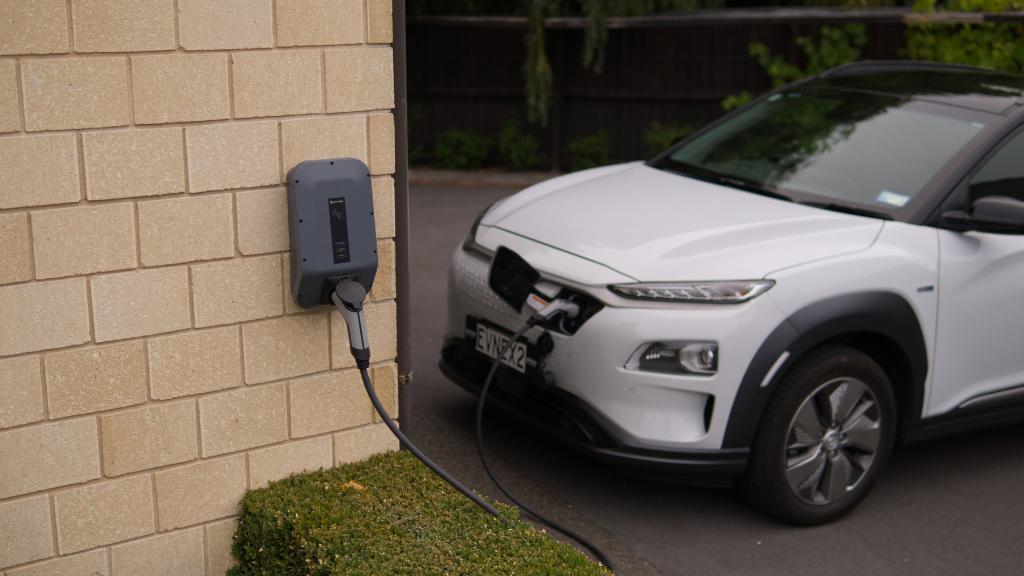
Charger Unit Cost vs Installation Cost: What You’re Actually Paying For
It helps to think of your quote as two separate line items rather than one lump sum: the hardware and the labour.
The charger unit is the box on the wall. Entry-level tethered units start around £400, while premium smart chargers with solar integration or load-balancing features can run £700–£800 or more.
The installation is the electrician’s time: running a dedicated circuit from your consumer unit, mounting the charger, connecting it, testing it, and notifying your Distribution Network Operator (DNO) a legal requirement for most home chargers. For a straightforward job, this typically costs £400–£600.
It’s worth understanding why that labour cost is what it is, rather than treating it as an arbitrary fee. A competent installer isn’t just fitting a box they’re assessing your existing consumer unit’s spare capacity, checking your earthing arrangement is suitable for EV charging (more on PEN fault protection below), selecting the correct protective devices for the new circuit, and critically issuing you a certificate at the end (an Electrical Installation Certificate or Minor Works Certificate, depending on the scope). That certificate is what proves the work meets BS 7671 and is what your insurer, your grant application, and any future property buyer will want to see. This is also why the same-looking job can be quoted differently: an installer pricing in proper testing, certification and DNO notification isn’t padding the bill; they’re doing the parts of the job you can’t see.
| Component | Typical Cost |
| 7kW smart charger unit | £400–£800 |
| Standard installation labour | £400–£600 |
| Total (straightforward job) | £800–£1,200 |
| London/South East premium | +15–25% |
Some installers bundle these into one fixed price; others itemise them. Either is fine, but you should always be able to see both halves of the number before you commit.
EV Charger Installation Cost by Charging Speed
The charger’s power output is the biggest single factor in both hardware and installation cost, because it determines what your home’s electrical supply needs to support.
| Charger Speed | Typical Fully Installed Cost | Notes |
| 3kW (granny/portable) | £500–£700 | Rarely needed as a dedicated install; slow overnight charging |
| 7kW (standard smart charger) | £800–£1,200 | The right choice for the vast majority of UK homes |
| 11kW | £1,200–£1,800 | Only relevant if you already have three-phase power |
| 22kW | £1,800–£3,000 (existing 3-phase) | Most home EVs cap onboard AC charging at 7kW or 11kW anyway |
| 22kW (needs new 3-phase supply) | £5,000–£12,000+ | Rarely justified for a single home |
For nearly all UK homes, 7kW is the sensible choice. It delivers a full overnight charge on a standard single-phase supply, and most electric cars can’t actually make use of anything faster through their onboard AC charger. If you’re weighing this up in more detail, it’s worth reading a dedicated comparison of 3kW, 7kW and 22kW chargers before you commit to a spec.
Quick Decision Guide: Which Speed Do You Actually Need?
- Do you already have a three-phase supply, and does your car support 11kW+ AC charging? If not to either stop here, get a 7kW charger.
- Do you drive high daily mileage (100+ miles) and need a full charge in under 3 hours overnight? If yes, 11kW may be worth investigating if no, 7kW is fine.
- Are you installing a fleet, multiple vehicles, or a commercial site? Skip ahead to the commercial section below rather than pricing this as a domestic job.
- Is cost your primary concern and your car rarely does long daily trips? A 3kW unit or even a granny lead may genuinely be enough, don’t over-spec.
What Affects Your Installation Price
Two houses on the same street can get quotes £400 apart for what looks like an identical job. Here’s what actually moves the number:
Cable run length. Standard quotes usually cover 5–10 metres from the consumer unit to the charger. Beyond that, you’re paying for extra cable, containment, and labour time often an additional £15–£25 per metre. Cable routing also matters beyond just distance: a surface-mounted run in clip-on conduit is cheaper than a chased-in run buried into plaster, which is cheaper again than an underground armoured cable run across a garden.
Consumer unit condition. If your fuse box is older, has no spare capacity, or lacks RCD protection, it will need upgrading before a dedicated EV circuit can be added safely. Budget £300–£800 for this.
Groundworks and trenching. If the charger needs to sit away from the house, a detached garage, a charger at the end of a long driveway the cable often has to be buried. Trenching typically costs £60–£80 per metre, so even a modest 10-metre run can add £600–£800.
Three-phase upgrades. Needed only for 22kW charging on a current single-phase supply. This is a significant undertaking involving your DNO and can cost anywhere from £2,000 to £12,000+ depending on what work the network operator needs to do.
Earthing arrangements (PEN fault protection). Most UK homes are supplied via PME (Protective Multiple Earthing). In the rare event of a broken neutral on the network, PME can, in theory, cause the earth at your house to become live, which is a serious safety concern once you introduce a permanent outdoor connection like an EV charger. BS 7671 Section 722 requires this risk to be designed out, either through an open-PEN protection device built into the charger, or an independent earth electrode installed at the property. Many modern smart chargers have this protection built in as standard, which is one of the reasons “just buying a cheap charger online and having anyone fit it” is a false economy. The protection has to be right for your supply, not assumed.
DNO notification. Most EV charger installations are notifiable to your electricity network operator under industry engineering recommendations (commonly referred to as G100, which specifically covers customer EV charging equipment). Your installer handles this for you, but it’s why lead times can stretch network operators sometimes need to confirm the local network has spare capacity, particularly for three-phase or higher-power installations. This isn’t paperwork for its own sake: it protects the wider local grid from being overloaded by uncoordinated high-power charging.
Load balancing. For homes with limited incoming supply capacity common in older properties, or where a heat pump, electric shower and EV charger are all drawing power at once some chargers include dynamic load management, automatically reducing charging speed if the whole-house demand gets close to the supply limit. This avoids tripping the main fuse and, in some cases, avoids the need for a costly supply upgrade altogether. If you’ve got other high-demand appliances already installed or planned, mention this to your installer before they quote, as it can change the recommended spec.
Future-proofing. It’s worth a five-minute conversation with your installer about what you might need later, even if you don’t act on it now. Common examples: running slightly larger ducting than strictly necessary so a cable can be pulled through later without re-digging a trench; leaving spare capacity in the consumer unit for a second charger if you’re likely to get a second EV; and considering whether you might add solar panels or battery storage down the line, since installing all three together can save on labour and, as covered below, potentially on VAT.
Charger type. Tethered chargers (built-in cable) cost slightly more than untethered (socket-only) units. Since 2022, all new home chargers sold in the UK must be smart chargers under the Electric Vehicles (Smart Charge Points) Regulations, so factor that in regardless of budget.
Location. Installers in London and the South East typically charge 10–25% more than the UK average, reflecting local labour rates.
Property type. Flats and apartments introduce a different set of cost drivers entirely covered separately below.
Common mistake: Assuming your home’s earthing and supply capacity are “someone else’s problem” and only asking about it after the quote. Raising it upfront changes the price and, in some cases, the entire spec.

Labour Costs Explained
Most certified electricians either quote a fixed price for a “standard EV install” or charge £40–£80 per hour. A straightforward job mounting the unit, running a short cable, connecting and testing the circuit, and commissioning the charger usually takes around half a day. Jobs involving trenching, a consumer unit swap, or DNO-related delays can stretch to a full day or more, and DNO notification itself can add 2–10 working days of lead time before installation, even though it doesn’t add to the bill directly.
The accreditation of the person doing the work matters more here than in most trades. Look for NICEIC, NAPIT or ECA registration specifically; these are the recognised “competent person” schemes that allow an electrician to self-certify EV charger installations as compliant with Part P, without needing separate sign-off from council building control. It also matters for the grant: OZEV-approved installer status is a hard requirement, not a nice-to-have, for claiming the EV Chargepoint Grant or Workplace Charging Scheme funding.
If you want a fuller breakdown of what’s actually included in an hourly rate versus a fixed package and how to compare quotes that are structured differently that’s worth a closer look on its own.
Standard vs Complex Installations
| Feature | Standard Installation | Complex Installation |
| Cable run | Under 10m, surface-mounted | 15m+, buried or routed through walls |
| Consumer unit | Modern, spare capacity | Needs upgrading |
| Mounting | Direct to house brickwork | Freestanding pedestal or garden wall |
| Groundworks | None | Trenching required |
| Earthing | Standard PME protection sufficient | May need independent earth electrode |
| Typical cost | £800–£1,200 | £1,800–£2,500+ |
| Typical time | Half a day | Full day or more |
Commercial and Workplace EV Charger Installation Costs
Business installations scale very differently to domestic ones, because the specification depends entirely on how the site will be used.
A single workplace charger (say, for a director’s parking space) is priced similarly to a domestic install, often slightly more due to commercial wiring standards: roughly £1,200–£1,800 per socket.
Multi-bay workplace or visitor car parks involve shared infrastructure costs. A 10-space car park fitted with 7kW chargers typically costs £12,000–£25,000 for the charging infrastructure alone, before any electrical supply upgrade.
Fleet installations sit at the top end. A 20-vehicle fleet with 22kW chargers and load management needed to avoid breaching peak demand charges typically runs £80,000–£180,000 including supply upgrades.
Commercial rapid-charging hubs (public-facing DC rapid chargers) are a different category altogether, often running into the hundreds of thousands once grid connection upgrades are factored in.
For any installation beyond a handful of sockets, expect your installer to involve the DNO much earlier in the process. Larger sites often require a formal capacity assessment, and if the site’s demand exceeds what the existing connection can support, a grid reinforcement request can add significant time sometimes months to the project timeline, quite separate from the on-site installation itself. This is one of the most common reasons commercial EV projects overrun their original schedule, and it’s worth asking about at the quotation stage rather than discovering it later.
If your business is exploring this, it’s worth reading our dedicated guide to commercial EV charger installation, which covers specification, grid capacity, and how to avoid over- or under-specifying for future growth.
EV Charger Installation for Flats and Apartments
Flats introduce cost drivers that don’t apply to a house with a driveway. Freeholder or managing agent consent, plus block insurance sign-off, typically adds £150–£500 in admin costs before any electrical work starts. If there’s no obvious wall space, a feeder pillar or freestanding pedestal is usually needed (around £180), and running cable under shared parking areas costs £60–£80 per metre including reinstatement.
One complication worth flagging early: some flats only have a single shared electricity supply and meter for the whole block, rather than individually metered supplies to each parking bay. Where that’s the case, your installer will need to establish how the charger will be metered and billed separately from communal electricity use this can involve the managing agent and sometimes adds its own lead time, so it’s worth raising in your very first conversation with a freeholder, not after you’ve already had a quote.
The good news is that flat owners and renters are exactly who the current government grant is aimed at more on that below. We’ve also covered the practicalities of installing at a flat or rented property in more depth elsewhere.
Government Grants: How Much Can You Claim?
As of April 2026, the EV Chargepoint Grant offers up to £500 per socket (increased from £350), covering 75% of the combined cost of buying and installing an approved smart charger. It’s available to:
- Renters and flat owners/leaseholders with dedicated off-street parking
- Households with only on-street parking, installing an approved cross-pavement solution
- Landlords, for up to 200 sockets across their sites
Crucially, homeowners with a private driveway are no longer eligible. The original Electric Vehicle Homecharge Scheme closed to them in April 2022, and that hasn’t changed.
For businesses, the Workplace Charging Scheme offers the same £500-per-socket rate, up to 40 sockets (a maximum of £20,000 per applicant).
Both schemes are confirmed to run until 31 March 2027. You must use an OZEV-approved installer and an approved charger model and for most applicants, you now need to apply and receive confirmation of eligibility before installation begins, not after. Installing first can disqualify the claim entirely.
You’ll typically need to have proof of eligibility ready before applying a signed tenancy agreement for renters, or a recent utility bill for flat owners, plus written permission from the landlord or freeholder where applicable. Gathering this paperwork in advance is the easiest way to avoid delays.
Note: readers in Scotland and other devolved nations should also check for additional local support (Home Energy Scotland has historically offered supplementary schemes) we haven’t verified current figures for these, so treat this as a prompt to check directly rather than a confirmed figure.
This is a big enough topic that it deserves its own guide, which we’ve written separately.
VAT on EV Charger Installation
This trips a lot of people up. A standalone EV charger installation charger plus labour, with nothing else is charged at the standard 20% VAT rate. If the charger is installed at the same time as solar panels or a battery storage system, it can qualify for the 0% VAT rate under the energy-saving materials relief. This is separate from the VAT rate on the electricity itself, where home charging is taxed at 5% and public charging at 20% (a rate currently under legal challenge, though that dispute concerns the electricity supply, not installation).
If you’re planning solar and a charger together, it’s worth asking your installer to quote them as a single bundled job; the VAT saving alone can be worth a few hundred pounds.
Note: If you’re planning to install solar panels or battery storage alongside your EV charger, ask your installer to provide a combined quotation. Bundling the work may reduce your overall installation costs and could also affect the VAT treatment, depending on the current rules.
Running Costs After Installation
Installation is a one-off cost, but it’s worth understanding what you’ll pay afterwards, since it affects the payback period. On a standard variable tariff (roughly 25–30p/kWh), topping up a 60kWh battery from 20% to 80% about 36kWh costs roughly £9–£11. Switch to an EV-specific off-peak tariff, and overnight rates of 7–10p/kWh bring that same session down to around £3–£4.
The reason off-peak tariffs are so much cheaper isn’t a marketing gimmick it reflects genuinely lower wholesale demand on the grid overnight. Suppliers pass that saving on specifically to encourage EV owners to charge outside the evening peak, which also helps the wider network cope with growing EV numbers. All new smart chargers can schedule this automatically, so once installed, capturing the saving is simply a case of setting the right hours in the app once and leaving it. We’ve covered home charging costs in detail in a separate guide, including how they stack up against petrol and public charging.
Maintenance Costs
Home EV chargers have very few moving parts and are built for outdoor UK weather, so there’s no mandatory servicing schedule. Most come with a manufacturer warranty of around 3 years, and have a realistic working life of 10–15 years. Occasional firmware updates happen automatically over Wi-Fi.
It’s worth understanding that the manufacturer’s warranty (covering the unit itself) is separate from your installer’s workmanship guarantee (covering the quality of the installation). Reputable installers often back their workmanship with an insurance-backed guarantee via their competent person scheme, meaning the work is still protected even if the installer later goes out of business worth asking about specifically before you sign anything.
The main thing worth budgeting for isn’t the charger itself but the electrics around it if you’re due a periodic Electrical Installation Condition Report on your home anyway, it’s sensible to have the charger circuit checked at the same time.
Hidden Costs to Watch For
- Consumer unit upgrades not mentioned until the electrician is on site
- DNO notification delays rarely a cost, but can push back your install date
- Freeholder/managing agent consent fees on flats
- Earthing upgrades (independent earth electrode where PME protection isn’t suitable)
- Isolator switches or weatherproof enclosures for outdoor/pedestal mounting
- Additional protective devices (extra RCBOs, surge protection) on older consumer units
- Grant disqualification from installing before approval comes through
Money-Saving Tips
- Check grant eligibility before booking installation applying too late is the single most common way people miss out
- Choose 7kW over 22kW unless you have a specific, genuine need for faster AC charging
- Switch to an off-peak EV tariff as soon as your smart charger is live
- If you’re getting solar panels too, install everything in one visit to save on labour and potentially VAT
- Get at least two or three itemised quotes the spread between installers for the same job is often several hundred pounds
- Ask your employer about salary sacrifice schemes if you’re getting a new EV, as some bundle charger installation in at a discount
- Mention any planned future changes (second EV, solar, battery storage) at quotation stage retrofitting capacity later is almost always more expensive than building it in from day one
Realistic Pricing Examples
Example 1 Simple semi-detached house. Driveway charger, 6-metre cable run, modern consumer unit, no grant eligibility (owner-occupier). 7kW smart charger: £950 all-in.
Example 2 Victorian terrace, no driveway, tenant. Charger needs mounting on a garden wall 12 metres from the consumer unit, requiring a short trench. Charger unit £600 + installation £700 + trenching £450 = £1,750, less the £500 EV Chargepoint Grant = £1,250 net.
Example 3 Small business, 6 staff parking bays. 7kW chargers across 6 bays with basic load management, existing single-phase supply upgraded to three-phase to support the load. Total infrastructure cost around £18,000, offset by the Workplace Charging Scheme grant (£500 x 6 = £3,000) bringing the net cost to roughly £15,000.
Example 4 Leasehold flat with communal supply. Charger mounted on a shared pedestal in a residents’ car park, requiring freeholder consent, a separate sub-meter arrangement, and a 15-metre underground cable run to the nearest suitable connection point. Charger unit £500 + installation £700 + trenching £900 + admin/consent fees £300 = £2,400, less the £500 grant = £1,900 net. This example illustrates why flats can end up costing more overall despite qualifying for the grant the site complexity outweighs the funding.
Common Mistakes to Avoid
- Accepting the cheapest quote without checking accreditation. An OZEV-approved, NICEIC or NAPIT-certified installer is non-negotiable it protects your grant eligibility, your warranty, and your home insurance.
- Assuming groundworks or a consumer unit upgrade are included when they often aren’t.
- Installing before grant approval comes through. Under current rules, this can invalidate your claim entirely.
- Specifying 22kW “to be safe” when your car and supply don’t need it, adding thousands for no real-world benefit.
- Not mentioning other high-demand appliances (heat pumps, electric showers, future solar/battery plans) at quotation stage, leading to a spec that doesn’t account for whole-house load.
- Not telling your home insurer once the charger is installed. It’s a permanent electrical fixture and an added external asset, and most insurers expect to be told, much as they would for a new burglar alarm or conservatory.
- Not asking what happens if the job runs into complications on the day get this in writing upfront.
Choosing an Installer: A Quick Checklist
- Are they OZEV-approved (required for any grant claim)?
- Are they NICEIC, NAPIT or ECA registered?
- Does the quote separate charger unit cost from labour cost?
- Does the quote state the assumed cable run length?
- Is a consumer unit upgrade explicitly included or excluded?
- Do they confirm they’ll handle DNO notification?
- Will they issue an Electrical Installation Certificate on completion?
- Is their workmanship guarantee insurance-backed?
- Have you had at least two other quotes to compare against?
When to Get Multiple Quotes
Because the same job can be quoted anywhere from £800 to £1,750 depending on the installer, always get at least two or three itemised quotes before booking. Ask each installer to confirm: whether they’re OZEV-approved, what’s included versus what’s an “if needed” extra, cable run distance assumed, and whether they handle the grant application on your behalf. A good installer will walk you through all of this without being asked twice.
EV Charger Installation FAQs
Answers to the questions we get asked most about home EV charger installation in the UK.
Get a Fixed-Price Quote
Every property is a little different, and the only way to know exactly what your installation will cost is to have it surveyed properly. EV Install Pro provides itemised, no-surprises quotes covering the charger, labour, and any additional work your property needs and we handle the OZEV grant application for you where you’re eligible. If you’re ready to see a real number for your home or business, get in touch for a free quote.

[…] a full breakdown of installation costs, see our EV charger installation cost guide. For the complete picture of grants available alongside tax relief, see our EV charger grants […]
[…] no single number that applies across the board. Our cost guide covers general home charger pricing, and our labour cost breakdown explains typical electrician […]
[…] installation cost page covers current pricing, and for more detail there’s our breakdown of how much EV charger installation costs in the UK and a specific look at labour […]